孵化器 · 2025-11-27
Hong Kong vs Singapore for Startup Incorporation: Tax and Cost Comparison
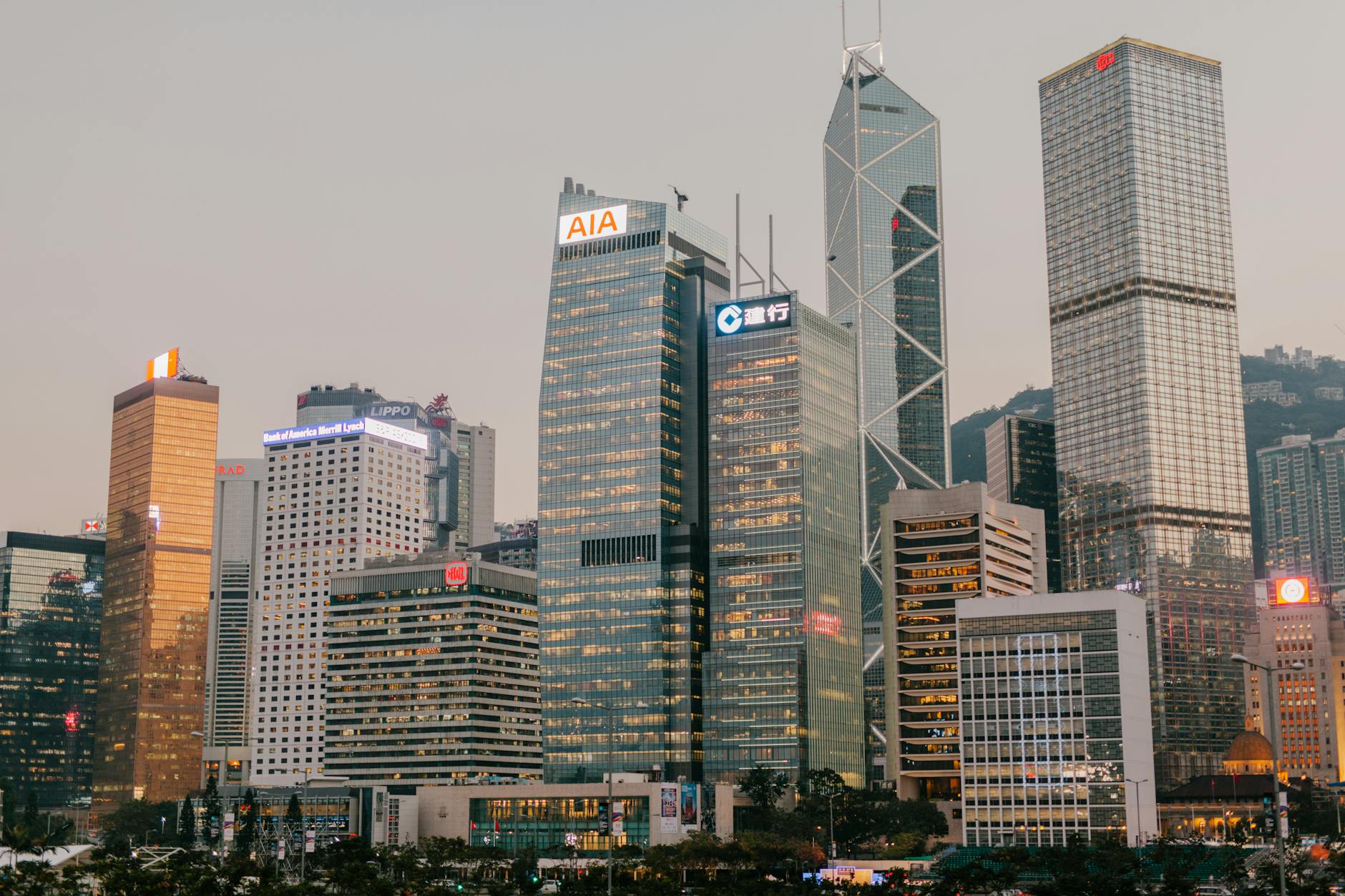
The decision of where to incorporate is the first material financial commitment a founder makes, and for Hong Kong-based teams weighing a cross-border structure, the Singapore option has become markedly more expensive in 2025. The Singapore Companies Act (Cap. 50) amendment in Q1 2025 raised the minimum issued share capital for a private company limited by shares from SGD 1 to SGD 50,000 if the company intends to apply for an Employment Pass for a foreign director, a de facto cost increase for any founder needing to relocate. Simultaneously, the Hong Kong Inland Revenue Department (IRD) maintained its two-tiered profits tax rate — 8.25% on the first HKD 2 million of assessable profits and 16.5% thereafter — unchanged since the 2018/19 assessment year. For a seed-stage startup with zero to HKD 5 million in revenue, the effective tax rate differential between the two jurisdictions has narrowed to approximately 20-40 basis points in Hong Kong’s favour, but the real divergence lies in upfront incorporation costs, annual compliance fees, and the tax treatment of share-based compensation. This article provides a line-by-line cost comparison using current 2025 fee schedules from the Hong Kong Companies Registry and the Singapore Accounting and Corporate Regulatory Authority (ACRA), alongside the respective tax codes, to allow a founder to calculate the net present value difference over a 24-month horizon.
Incorporation Costs and Statutory Requirements
Hong Kong: Low Entry, Fixed Annual Burden
Incorporating a private company limited by shares in Hong Kong under the Companies Ordinance (Cap. 622) requires filing with the Companies Registry. The standard government fee for incorporation is HKD 1,720 (HKD 1,545 for the certificate of incorporation plus HKD 175 for the business registration certificate). A typical corporate service provider charges between HKD 4,000 and HKD 8,000 for the full package, including registered address and company secretary for the first year. Total Year 1 cost: HKD 5,720 to HKD 9,720.
The mandatory annual compliance burden is fixed. Every Hong Kong company must file an annual return with the Companies Registry (fee: HKD 105 for a company with share capital of HKD 1 million or less) and a Profits Tax Return with the IRD. The company secretary — a statutory requirement under Section 474 of Cap. 622 — costs approximately HKD 3,000 to HKD 6,000 per year if outsourced. The registered address service adds HKD 1,000 to HKD 2,400 annually. Total recurring Year 2+ cost: HKD 4,105 to HKD 8,505.
Singapore: Higher Entry, Scalable Compliance
Incorporating a private company limited by shares in Singapore under the Companies Act (Cap. 50) requires registration with ACRA. The standard government fee is SGD 315 (approximately HKD 1,850 at the June 2025 exchange rate of SGD 1 = HKD 5.87). A corporate secretarial firm charges SGD 1,500 to SGD 3,000 for the first year, including registered address and nominee director if required. Total Year 1 cost: SGD 1,815 to SGD 3,315 (HKD 10,650 to HKD 19,460).
The critical structural difference is the nominee director requirement. A Singapore private company must have at least one director who is ordinarily resident in Singapore (Section 145(1) of the Companies Act). For a foreign founder without a Singapore Employment Pass, this means either paying a nominee director — typically SGD 3,000 to SGD 6,000 per year — or applying for an EntrePass, which requires a minimum SGD 50,000 paid-up capital (the Q1 2025 amendment). Total recurring Year 2+ cost without EntrePass: SGD 5,500 to SGD 9,500 (HKD 32,285 to HKD 55,765), inclusive of nominee director, company secretary, and registered address.
Corporate Tax Regimes: Effective Rates and Incentives
Hong Kong: Territorial System with Two-Tiered Rate
Hong Kong’s Inland Revenue Ordinance (Cap. 112) operates on a territorial basis: only profits sourced in Hong Kong are taxable. For a startup that generates revenue exclusively from Hong Kong customers, the two-tiered profits tax rate applies: 8.25% on the first HKD 2 million of assessable profits, and 16.5% on the balance. A company with HKD 1 million in profit pays HKD 82,500 in tax. A company with HKD 5 million in profit pays HKD 660,000 (HKD 165,000 on the first HKD 2 million plus HKD 495,000 on the remaining HKD 3 million).
No capital gains tax, no VAT/GST, no withholding tax on dividends, and no tax on foreign-sourced income unless remitted to Hong Kong and having a Hong Kong source. The IRD’s 2023-24 annual report indicated that 78% of all registered companies filed a “nil” or “loss” return, reflecting the low tax burden on early-stage entities.
Singapore: Worldwide System with Territorial Exemptions and Grants
Singapore taxes profits on a worldwide basis but offers a territorial exemption for foreign-sourced dividends, branch profits, and service income if the headline tax rate in the source jurisdiction is at least 15% and the income has been subject to tax there (Section 13(8) of the Income Tax Act). The corporate tax rate is a flat 17%.
The Startup Tax Exemption (SUTE) scheme, effective for the first three years of assessment, exempts the first SGD 100,000 of normal chargeable income at 75% (i.e., SGD 75,000 exempt) and the next SGD 100,000 at 50% (i.e., SGD 50,000 exempt). A company with SGD 200,000 in profit pays tax on SGD 75,000 at 17% = SGD 12,750 (approximately HKD 74,800). The same profit in Hong Kong (HKD 1,174,000 at the SGD/HKD rate) would attract tax of HKD 96,855 (HKD 165,000 on the first HKD 2 million bracket, but profit is only HKD 1.174 million, so the entire amount at 8.25% = HKD 96,855). Hong Kong is approximately 29% cheaper on this profit level.
However, the SUTE is a time-limited concession. After Year 3, the Partial Tax Exemption (PTE) applies: 75% exemption on the first SGD 10,000 and 50% on the next SGD 190,000. A SGD 200,000 profit in Year 4 attracts tax on SGD 97,500 at 17% = SGD 16,575 (HKD 97,300), which is essentially identical to Hong Kong’s HKD 96,855.
Share-Based Compensation and Employee Tax Treatment
Hong Kong: No Tax at Grant or Vesting; Tax at Exercise Only
Under the Inland Revenue Ordinance, share options granted under a qualified scheme (approved by the IRD under Section 9(1)(d)) are not taxable at grant or vesting. Tax arises only when the option is exercised, and the taxable amount is the difference between the market value of the shares on the exercise date and the exercise price. This amount is treated as employment income and subject to salaries tax at progressive rates (2% to 17%) or a standard rate of 15%, whichever is lower.
For a startup issuing options at a nominal exercise price (e.g., HKD 0.01 per share), the taxable gain is the full market value at exercise. If the shares are not publicly traded, the IRD accepts a valuation based on the most recent third-party investment round or a net asset value assessment. This creates a clear, deferrable tax liability that aligns with the founder’s liquidity event.
Singapore: Tax at Vesting; Section 13(1)(a) Exemption Available
Singapore taxes share-based compensation at the point of vesting (or acquisition, if earlier), not at exercise. The taxable amount is the market value of the shares on the vesting date minus any consideration paid. This is treated as employment income under Section 10(1) of the Income Tax Act and subject to progressive rates (0% to 24%).
The Employee Share Option Scheme (ESOS) tax deferral scheme allows deferral of tax until the point of sale if the company is an “approved startup” under the Enterprise Singapore framework. However, approval requires the company to have less than SGD 20 million in annual turnover and fewer than 200 employees. A pre-revenue startup qualifies, but the application process takes 8-12 weeks and requires an independent valuation. For a Hong Kong-based founder incorporating in Singapore, the administrative burden of maintaining two sets of employee share scheme documentation — one for Hong Kong employees and one for Singapore employees — adds approximately HKD 15,000 to HKD 30,000 in legal fees per scheme.
Banking, Currency, and Operational Frictions
Hong Kong: HKD Peg, No Capital Controls, Instant Multi-Currency
Hong Kong’s currency board system pegs the HKD to the USD at 7.75-7.85, providing de facto USD stability without the regulatory overhead of a USD bank account. A startup can open a multi-currency account with any of the three note-issuing banks (HSBC, Standard Chartered, Bank of China (Hong Kong)) within 5-10 business days if the director is physically present. Minimum balance requirements are typically HKD 10,000 to HKD 50,000 for a business account.
The Hong Kong Monetary Authority (HKMA) does not impose capital controls. Funds can be freely transferred in and out of Hong Kong in any currency. For a startup receiving USD-denominated seed funding from a US-based VC, the funds clear in T+1 with no FX conversion required if held in a USD sub-account.
Singapore: SGD Managed Float, MAS Regulatory Overhead
Singapore’s Monetary Authority of Singapore (MAS) operates a managed float for the SGD against a basket of currencies. While this provides long-term stability, it introduces FX conversion costs for any USD-denominated revenue or investment. A typical business account with DBS or OCBC requires SGD 5,000 to SGD 20,000 in minimum average daily balance to waive monthly fees (SGD 30 to SGD 50 per month).
The MAS imposes anti-money laundering (AML) requirements under the Payment Services Act that are more stringent than Hong Kong’s. A non-resident director opening a corporate account must provide a certified copy of the passport, proof of residential address, and a detailed business plan with projected transaction volumes. Approval times range from 2 to 6 weeks, compared to Hong Kong’s 1-2 weeks. For a founder who needs operational banking within 30 days, Singapore adds a material time cost.
Actionable Takeaways
-
For a pre-revenue startup with zero Hong Kong employees, incorporating in Hong Kong is approximately HKD 5,000 to HKD 10,000 cheaper in Year 1 and HKD 28,000 to HKD 47,000 cheaper annually from Year 2 onwards, driven entirely by the nominee director requirement in Singapore.
-
If the founder requires a Singapore Employment Pass, the Q1 2025 amendment to the Companies Act (Cap. 50) mandates a minimum SGD 50,000 paid-up capital, effectively adding HKD 293,500 in committed capital that cannot be withdrawn without ACRA approval.
-
For a startup issuing employee share options, Hong Kong’s tax-at-exercise model is more favourable for early-stage employees than Singapore’s tax-at-vesting model, unless the company obtains ESOS deferral approval, which adds 8-12 weeks of regulatory processing time.
-
The effective tax rate differential for a company with HKD 1 million to HKD 5 million in profit is negligible (under 1%) once the SUTE/PTE exemptions in Singapore are applied, making the decision primarily about compliance cost and banking convenience, not tax savings.
-
A Hong Kong incorporation with a Singapore branch or subsidiary is the optimal structure for a startup that needs both jurisdictions: the Hong Kong entity handles the low-cost incorporation and territorial tax, while the Singapore branch manages regional sales and applies for the Productivity and Innovation Credit (PIC) grant, which offers a 400% tax deduction on qualifying R&D expenditure.